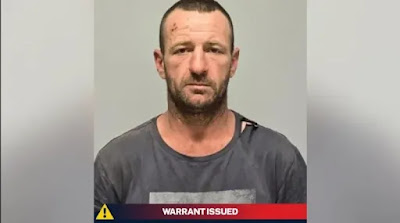

Human remains believed to be those of fugitive Julian Ingram have been discovered in remote bushland in western New South Wales, marking a major and deeply unsettling development in the investigation into the Lake Cargelligo triple homicide that stunned Australia earlier this year.
New South Wales Police confirmed Monday that a body was located inside Round Hill Nature Reserve, roughly 50 kilometers northwest of Lake Cargelligo, near an abandoned Ford Ranger utility vehicle linked to the investigation. Authorities said the remains were found in what investigators described as a “very decomposed state,” alongside a firearm that will now undergo extensive forensic testing.
While formal identification has not yet been completed, detectives believe the body is that of 37-year-old Julian Ingram, the man at the center of one of the state’s most intensive regional manhunts in recent memory.
The discovery potentially brings an end to a months-long search that began after the fatal shootings of Sophie Quinn, her partner John Harris, and Sophie’s aunt, Nerida Quinn, on January 22 in the small rural community of Lake Cargelligo. Sophie Quinn was reportedly pregnant at the time of her death. A fourth victim, 19-year-old Kaleb Macqueen, survived after suffering gunshot wounds during the attack.
According to investigators, the shootings unfolded in rapid succession and left the close-knit town reeling with shock, grief, and fear. Residents described the aftermath as surreal, with emergency crews flooding the area while police launched an urgent operation to locate Ingram, who allegedly fled the scene immediately after the violence erupted.
What followed was one of the most extensive police searches seen in regional New South Wales in recent years. Tactical police, homicide detectives, specialist rescue officers, drone teams, dog squads, and aerial search crews were deployed across vast stretches of farmland, scrub, and isolated bushland throughout the state’s central west.
For months, sightings and rumors circulated throughout regional communities as authorities pursued leads connected to Ingram’s possible whereabouts. The search effort stretched across remote properties, abandoned tracks, and national parks, with investigators working under the belief that Ingram may have been surviving in isolated terrain while evading capture.
Police say the body was ultimately discovered not by investigators directly involved in the manhunt, but by National Parks and Wildlife Service personnel carrying out feral animal control operations inside Round Hill Nature Reserve. Workers reportedly came across the abandoned vehicle before locating the remains nearby.
Assistant Commissioner Andrew Holland described the discovery as a significant moment not only for investigators but also for the wider Lake Cargelligo community, which has spent months living under the emotional shadow of the killings.
“This has been an incredibly traumatic period for the victims’ families, the local community, and the officers involved in the investigation,” Holland said during a media briefing. “While formal identification is still pending, this discovery may provide some measure of closure after months of uncertainty.”
The case has also sparked broader scrutiny across New South Wales regarding domestic violence intervention systems and bail oversight procedures. Authorities confirmed earlier in the investigation that Ingram had been on bail over domestic violence-related allegations involving Sophie Quinn at the time of the shootings, prompting difficult public questions about risk assessment, firearm access, and whether additional preventative measures could have been taken.
Advocacy groups and legal experts have since pointed to the tragedy as another painful example of the dangers associated with high-risk domestic violence cases, particularly in regional communities where access to support services and rapid intervention can be limited.